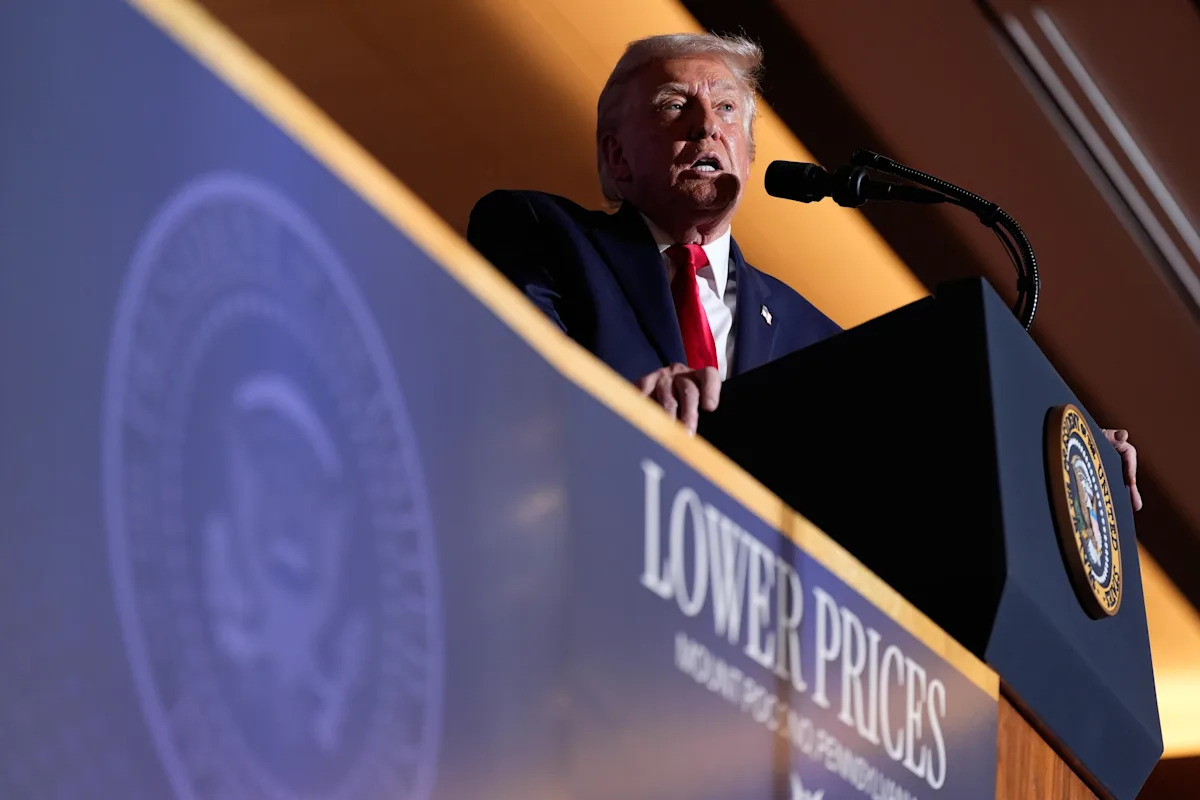
WASHINGTON (AP) — Nearly two dozen House Republicans joined with Democrats on Thursday to pass a bill that would restore collective bargaining rights to hundreds of thousands of federal employees, an attempt to overturn an executive order President Donald Trump issued earlier this year.
The measure passed 231-195 after reaching the floor through a bipartisan maneuver that bypassed GOP leadership — a so-called “discharge” tactic that is being used with increasing frequency as Republicans grapple with dysfunction in the chamber. The bill still needs Senate approval to become law, but 20 Republicans agreed with Democrats in a rare break from the president.
The executive order Trump issued in March aimed to end collective bargaining for employees of agencies with national security missions across the federal government. He said he had the authority to revoke the rights under a 1978 law.
“The reinstatement of these rights is not a concession – it is a commitment. A commitment to treat federal workers with dignity, to strengthen a resilient public service, and to honor the commitment of the men and women who show for the American people every day,” said GOP representative Brian Fitzpatrick, co-sponsor of the bill, on the floor before passage.
Trump’s order targeted the union rights of about 600,000 of the 800,000 federal workers represented by the American Federation of Government Employees, or AFGE, including those at the Department of Veterans Affairs and the Department of Defense.
The union is challenging those moves in court, arguing they are illegal and retaliatory. In May, an appeals court said that the administration can move forward with the executive order while the case unfolds.
In a statement after Thursday’s vote, AFGE said it “extends its deep appreciation to every member of Congress who voted for the bill.” The group’s president, Everett Kelley, called it a “seismic victory.”
The approval of the bill was also praised by the AFL-CIO, the largest labor federation in the United States
“We applaud Republicans and Democrats who stood with workers and voted to reverse the single largest union-busting act in American history,” said Liz Shuler, the group’s president.
The bill reached the floor through a discharge petition led by Rep. Democrat Jared Golden of Maine. It’s a tactic that has been used more frequently in this Congress because of frustrations with GOP leadership, including in the high-profile push to release the Jeffrey Epstein files. Any lawmaker can force a vote on legislation if their petition gets 218 signatures, a majority in the 435-member House.
All House Democrats who voted supported the measure to restore bargaining rights. House Democratic Leader Hakeem Jeffries supported the bill, saying on the floor before its passage that it would help the “public servants who have been viciously targeted by the Trump administration since the very beginning of his time in office.”
While passage in the Republican-led Senate seems unlikely, the vote represented one of the first formal rebuke of the President’s chamber and the number of executive orders he has issued during his second term.
The White House did not immediately respond to a request for comment.
Still, many of the Republicans who supported the bill still refrained from calling the president directly. Speaking in the House before voting in favor of the bill, New York Republican Mike Lawler said that “earlier this year, an executive order changed the status of collective bargaining.”
“Every American deserves a voice in the workplace, and that includes the people who keep our government running and open,” Lawler said.
Of the 20 Republicans who supported the bill, many, including Fitzpatrick, face tough re-elections next year. This comes at a time when some Republicans, under Trump’s leadership, have become more supportive of labor unions, which have long been a key part of the Democratic Party coalition.
New Jersey representative Jeff Van Drew, who switched parties in Trump’s first term, was among the Republicans to support the bill, but before the vote he told reporters that he was not trying to send a message to the president with his vote.
“No message here,” Van Drew said. “This is a New Jersey message. I want to take care of my people. And I’ve always been supportive of unions.”
___